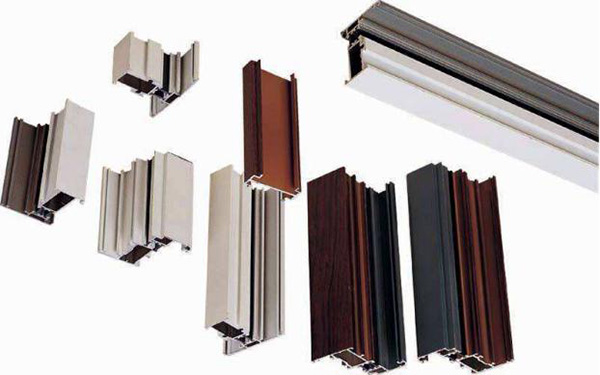
Aluminum Profile production involves a precise system of thermal processing and surface treatment. The core processes include alloy melting, casting, extrusion, heat treatment, surface treatment, and precision cutting and packaging. 
Firstly, elements such as aluminum, magnesium, and silicon are proportioned according to the brand specifications, and then melted and cast into aluminum bars. The aluminum bars are heated to 480–530℃ and extruded through a mold into profiles of a specific cross-section. After extrusion, they undergo straightening and sawing, and then sent into an aging furnace (around 195℃) for heat preservation to enhance hardness and strength. Surface treatment determines the appearance and corrosion resistance: anodic oxidation forms a dense oxide film, providing wear and corrosion resistance; powder coating/fluorocarbon coating offers rich colors and strong weather resistance; electrophoresis coating provides a fine and uniform surface, suitable for high-end doors and windows. Finally, the products undergo quality inspection, precision cutting, packaging, and storage. The entire process is strictly controlled for accuracy, ensuring that the straightness, dimensional tolerance, and surface quality of the profiles meet standards. Understanding the process helps to appreciate why aluminum profiles possess the comprehensive advantages of high strength, good precision, and long service life, and provides a professional basis for selection and procurement.