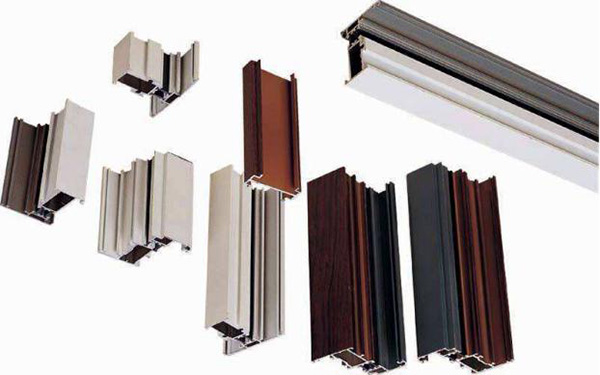
Aluminum profiles refer to materials with various shapes and sizes made from aluminum and aluminum alloys through processes such as extrusion. The following is a detailed introduction about aluminum profiles:
Main Features
Lightweight: The density of aluminum profiles is about 2.7g/cm ³, which is about one-third of that of steel. It is lightweight and easy to transport and install.
Strong corrosion resistance: Under most environmental conditions, aluminum can form a dense oxide film on its surface, effectively resisting corrosion and exhibiting excellent corrosion resistance in environments such as air and water.
High conductivity: On the basis of equal weight, aluminum has a conductivity close to twice that of copper and is often used in the electrical field.
Good thermal conductivity: The thermal conductivity of aluminum alloy is approximately 50-60% that of copper, making it suitable for manufacturing heat exchangers, radiators, etc.
Non ferromagnetic: Aluminum profiles are non ferromagnetic materials, which are crucial for the electrical and electronic industries.
Good processability: Aluminum profiles can be processed into various shapes through various processes such as extrusion, cutting, and welding to meet different application needs.
High recyclability: Aluminum has extremely high recyclability, and the characteristics of recycled aluminum are almost no different from those of primary aluminum, making it highly valuable for recycling and reuse.
Main Categories
Classified by purpose: It can be divided into architectural aluminum profiles, radiator aluminum profiles, general industrial aluminum profiles, rail vehicle structural aluminum alloy profiles, mounting aluminum profiles, etc.
Classified by alloy composition: aluminum profiles can be divided into alloy grades such as 1024, 2011, 6063, 6061, 6082, 7075, among which the 6 series is the most common.
Classified by surface treatment: can be divided into
Anodized aluminum, electrophoretic coating aluminum, powder coating aluminum, wood grain transfer printing aluminum, fluorocarbon coating aluminum, polished aluminum, etc.
production process
Melting and casting: Firstly, according to the required alloy grade, the raw materials are added to the melting furnace for melting, and impurities are removed through refining methods such as degassing and slag removal. Finally, the melted aluminum liquid is cooled and cast into various specifications of round casting rods.
Squeezing: Design and manufacture molds based on the cross-section of the profile product, and extrude the heated round cast rod from the mold into shape. Some alloys also need to undergo air cooling quenching and artificial aging treatment to strengthen their performance.
Coloring: Extruded aluminum alloy profiles usually require surface treatment, such as anodizing, to increase corrosion resistance, wear resistance, and aesthetics.
Application field
In the field of architecture, it is widely used in doors, windows, curtain walls, sunrooms, etc. It not only has a modern appearance, but also meets different design needs, while having good weather resistance and safety.
In the field of transportation, aluminum profiles can effectively reduce the weight of vehicles, improve fuel efficiency and transportation performance in the manufacturing of automobiles, trains, ships, airplanes and other transportation vehicles.
In the field of household appliances, many components of refrigerators, washing machines, air conditioners, and other household appliances are made of aluminum profiles, which extend the product's service life by utilizing their good thermal conductivity and strong corrosion resistance.
In the industrial field, it is used for the skeleton of automated mechanical equipment and enclosures, and can withstand certain weight and pressure to meet industrial production needs.